Getting paid: export realisation, FIRA and e-BRC explained
Shipping the goods is half the job. Here is how realisation works, which proofs you need, and why bank charges deserve a line of their own.
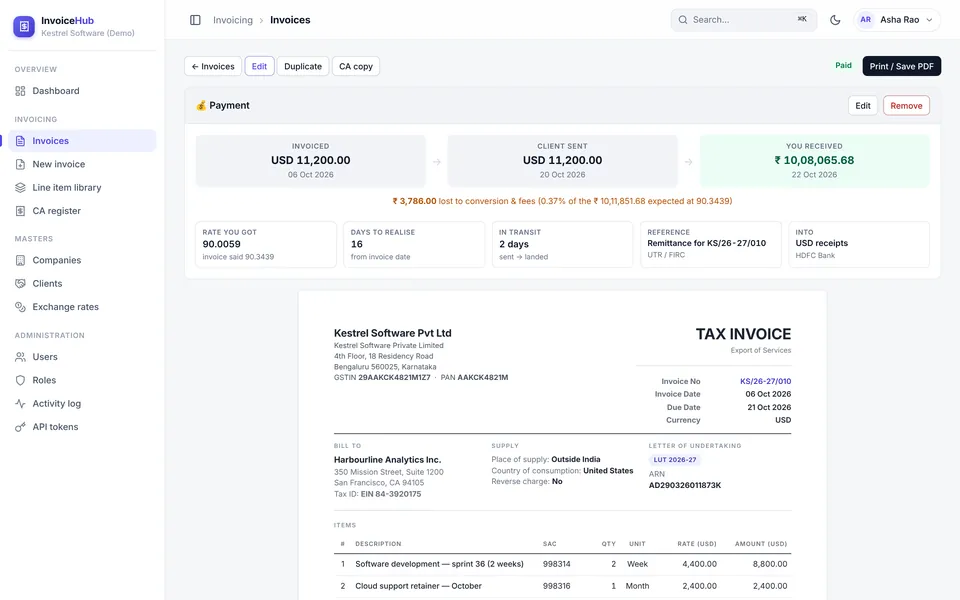
Record each payment against its invoice: when the client paid, when you received it, and the INR your bank credited. Invoice Hub shows the gap.
Intermediary fees and conversion spreads are invisible until someone does the arithmetic.
When the client paid and when you received it are different days, with different consequences.
Unrealised exports need follow-up long before the RBI deadline.
Received on, INR credited, client-paid date and amount sent, bank account and reference.
Invoiced → client sent → you received, with the deduction in rupees and per cent.
The rate you actually achieved, fees included. Usually the surprising number.
How long each invoice took from issue to cash in the bank.
Fees and realisation stay on the CA copy and the register.
Your accountant sees realisation detail without asking.
No. You record receipts from your bank credit advice or FIRA, which keeps you in control.
Its status becomes Paid. The figures on the invoice are not changed.
One payment is recorded per invoice, with the amount actually received.
Anyone whose role includes Payments → Record / Remove.
Shipping the goods is half the job. Here is how realisation works, which proofs you need, and why bank charges deserve a line of their own.
Every March, exporters scramble for the same documents. Here is the list your CA will ask for, and a way to keep it ready all year.
Tell us about your business and we will set up a walkthrough with your own companies, buyers and currencies.